In spite of the fact that
I have a large stack of Mpm kits waiting to be built,
this is actually the first one I've tackled and I must
say I was very pleasantly surprised. Normally, building
a limited run biplane kit is about as much fun as bobbing
for apples in your neighbour's septic tank, but this went
together very well. In fact, I had so much fun building
it that the doctors were convinced I didn't need restraints
at night anymore and my medication could be reduced. That
unfortunate incident with the monkey and the superglue
soon changed their minds of course.
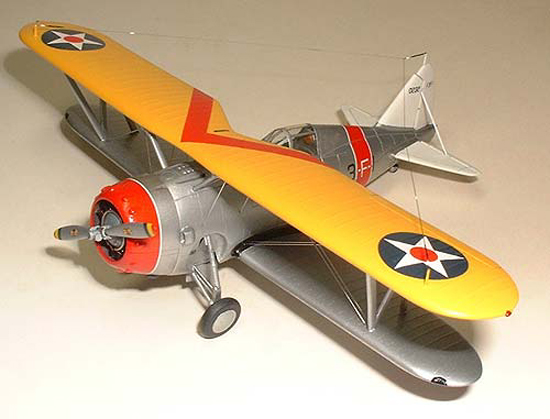
Still, it wasn't all smooth sailing. If it was, I'd
probably be building ship models. After gluing on the
horizontal stabilizers for instance, I discovered to
my immense displeasure that the elevator hinge lines
had a decidedly forward slant to them. Foolishly thinking
I could live with this I left them as is. My resolve
crumbled after about two days. The stabilizers were
then unceremoniously ripped off, a thin wedge of plastic
added to the root and then they were re-glued in place.
I also took the opportunity to cut off the elevators
so they could be re-attached later in a slightly more
candid position.
A similar problem was encountered
with the landing gear, which turned out to have far too
wide a track to it. Again I figured I could live with
it (will I ever learn?!) but of course I couldn't - it
just spoiled the "sit" of the airplane. One
of the characteristics of these dumpy little Grumman biplanes
is the narrow track landing gear with the wheels canted
in at a silly angle. At this point in the build however,
I had already lost all remaining sanity in the rigging
process (more on that anon) and I was extremely reluctant
to start snapping bits off to rebuild the gear, which
I don't think is unreasonable. Nonetheless, I eventually
gave in, gingerly ripped (if such a thing is possible)
the gear apart and rebuilt it correctly. The nightmares
have almost stopped now.
I
tried a new method when it came time to rig and, as I
mentioned before, it very nearly had me testing the flight
characteristics of this model in frustration. Normally
I would use stretched sprue for rigging. It's easy to
do and it tightens up beautifully with a bit of heat from
an incense stick. It's fine for WWI aircraft but I thought
something a bit shinier would be better to simulate the
highly polished flying wires of a peacetime biplane.
In this case I had a tube
of .004" stainless steel wire that I got from 4Plus
UK at the IPMS Nats a few years ago and inspired by
Bill Arnold's expert use of this stuff I figured I'd give
it a go. Silly me. At the end of several highly frustrating
hours I had a lovely pile of nice, shiny and hopelessly
bent stainless steel wire and one biplane model with nice,
shiny and mostly straight rigging. I also had a fancy
new jacket with arms that tie in the back and an unhealthy
fascination with Prozac. Amazingly enough, I probably
will use the wire again for between the wars bipes having
gained some experience with it but I will definitely stick
with stretched sprue for WWI aircraft.
This was also my first experience with Propagteam
decals and knowing their reputation for refusing
to budge once applied I approached them with a great
deal of trepidation. In fact they went on just fine
as long as they were plonked on top of a big puddle
of water. I made the mistake of putting Micro Set down
before applying one of the rudder decals and it promptly
stuck fast in the wrong position. All attempts to move
it ended with a completely destroyed decal and I couldn't
find any suitable replacement so there is now nothing
on the right side of the rudder - conveniently and purposely
hidden by the wing in the picture!
All
masking was done with Bare Metal Foil including
the wheel hubs and black wing roots. The handles on the
lower wing tips are CAF 8" 'O' decals with the centres
filled in with black paint.
Horizontal canopy frames are painted decal strips, the
canopy itself being dipped in Johnson's Klear beforehand
and another coat applied on top to seal the strips in.
I left off the bombsight as it only seems to have been
fitted when the bomb racks were installed, which has a
certain amount of logic to it I think.
The canopy had a lovely
big ejector pin mark on the inside which needed to be
sanded and polished out. It is also not quite right in
that it is too short and the vertical frames are not vertical
- they are canted to the rear. It looks suspiciously like
the drawings in Squadron/Signal's "Grumman
Biplane Fighters In Action"; inaccurate drawings
and colour profiles being two of my many pet peeves with
that somewhat over-rated series of books. Still, I'm not
concerned enough about the inaccuracy to lose sleep over
it or, heaven forbid, fix it.
The decals for the propeller
tips weren't big enough to go all the way around the blades
so I liberated some from a Microscale Grumman Duck
sheet with the Hamilton Standard logos coming from the
kit. I originally planned to give the prop a nice polished
metal finish but photos showed them to be quite dull so
I applied a coat of of clear flat after the decals were
dry.
Locations for the exhausts
are scribed in the bottom of the resin cowling but none
are supplied nor are they mentioned in the instructions.
I made them from thin slices of Contrail tubing flattened
to an oval shape.
Antenna is good ol' stretched
sprue with the bungee cords and insulators built up from
blobs of flat black and white paint respectively and I
used the photo etched bits supplied for the tiny masts.
Left:
The resin engine wasn't too bad but I added a bit of detail
in the form of that cute little data placard from a Reheat
set and ignition wires.
Centre: The engine mount wasn't long enough
to reach the back of the engine so a couple of layers
of .030" sheet were needed to help things out a bit.
5 minute epoxy was my adhesive of choice for the resin
engine, cowling and mount.
Right: Prop as supplied in the kit. In a
word, yecch. I cut the blades off and stuck them into
a new hub made from plastic tube and rod.
Below left: Holes were drilled in the ends
of the struts and bits of wire stuck in. These fit in
holes drilled in the wings and fuselage to provide a more
positive mounting.
Paint
is a 50/50 mix of Humbrol Bright Silver and Extracolour
Corroguard for the wings and fuselage. I added a touch
more Bright Silver when spraying the fuselage to try
and differentiate between the anodised metal fuselage
and the aluminum doped fabric wings. It's subtle. So
subtle in fact, it's completely unnoticeable.
Top wing is Humbrol Yellow with a few drops of orange
in, red is good old Humbrol Bright Red and the tail
is Gunze Gloss White. Final finish is a 60/40 mix of
Gunze Clear Gloss & Clear Flat.


 Still, it wasn't all smooth sailing. If it was, I'd
probably be building ship models. After gluing on the
horizontal stabilizers for instance, I discovered to
my immense displeasure that the elevator hinge lines
had a decidedly forward slant to them. Foolishly thinking
I could live with this I left them as is. My resolve
crumbled after about two days. The stabilizers were
then unceremoniously ripped off, a thin wedge of plastic
added to the root and then they were re-glued in place.
I also took the opportunity to cut off the elevators
so they could be re-attached later in a slightly more
candid position.
Still, it wasn't all smooth sailing. If it was, I'd
probably be building ship models. After gluing on the
horizontal stabilizers for instance, I discovered to
my immense displeasure that the elevator hinge lines
had a decidedly forward slant to them. Foolishly thinking
I could live with this I left them as is. My resolve
crumbled after about two days. The stabilizers were
then unceremoniously ripped off, a thin wedge of plastic
added to the root and then they were re-glued in place.
I also took the opportunity to cut off the elevators
so they could be re-attached later in a slightly more
candid position.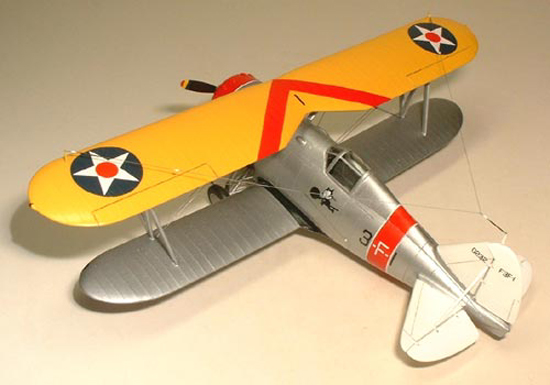 I
tried a new method when it came time to rig and, as I
mentioned before, it very nearly had me testing the flight
characteristics of this model in frustration. Normally
I would use stretched sprue for rigging. It's easy to
do and it tightens up beautifully with a bit of heat from
an incense stick. It's fine for WWI aircraft but I thought
something a bit shinier would be better to simulate the
highly polished flying wires of a peacetime biplane.
I
tried a new method when it came time to rig and, as I
mentioned before, it very nearly had me testing the flight
characteristics of this model in frustration. Normally
I would use stretched sprue for rigging. It's easy to
do and it tightens up beautifully with a bit of heat from
an incense stick. It's fine for WWI aircraft but I thought
something a bit shinier would be better to simulate the
highly polished flying wires of a peacetime biplane. This was also my first experience with Propagteam
decals and knowing their reputation for refusing
to budge once applied I approached them with a great
deal of trepidation. In fact they went on just fine
as long as they were plonked on top of a big puddle
of water. I made the mistake of putting Micro Set down
before applying one of the rudder decals and it promptly
stuck fast in the wrong position. All attempts to move
it ended with a completely destroyed decal and I couldn't
find any suitable replacement so there is now nothing
on the right side of the rudder - conveniently and purposely
hidden by the wing in the picture!
This was also my first experience with Propagteam
decals and knowing their reputation for refusing
to budge once applied I approached them with a great
deal of trepidation. In fact they went on just fine
as long as they were plonked on top of a big puddle
of water. I made the mistake of putting Micro Set down
before applying one of the rudder decals and it promptly
stuck fast in the wrong position. All attempts to move
it ended with a completely destroyed decal and I couldn't
find any suitable replacement so there is now nothing
on the right side of the rudder - conveniently and purposely
hidden by the wing in the picture!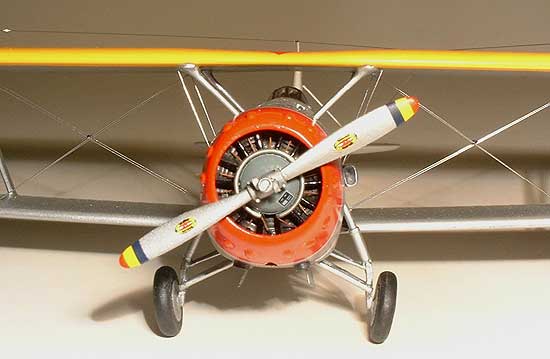 All
masking was done with Bare Metal Foil including
the wheel hubs and black wing roots. The handles on the
lower wing tips are CAF 8" 'O' decals with the centres
filled in with black paint.
All
masking was done with Bare Metal Foil including
the wheel hubs and black wing roots. The handles on the
lower wing tips are CAF 8" 'O' decals with the centres
filled in with black paint.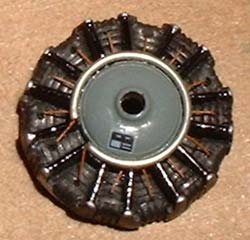


 Paint
is a 50/50 mix of Humbrol Bright Silver and Extracolour
Corroguard for the wings and fuselage. I added a touch
more Bright Silver when spraying the fuselage to try
and differentiate between the anodised metal fuselage
and the aluminum doped fabric wings. It's subtle. So
subtle in fact, it's completely unnoticeable.
Paint
is a 50/50 mix of Humbrol Bright Silver and Extracolour
Corroguard for the wings and fuselage. I added a touch
more Bright Silver when spraying the fuselage to try
and differentiate between the anodised metal fuselage
and the aluminum doped fabric wings. It's subtle. So
subtle in fact, it's completely unnoticeable.
 Back
to 1/72 Aircraft Main
Back
to 1/72 Aircraft Main